Cloudflare v. Arcom: DNS blocking, EU sanctions, and the limits of the Digital Services Act
This blogpost, although very long, is a very simplified summary of the legal wranglings about an order placed on Cloudflare to block access to sanctioned Russian outlets for users of its DNS service in France.
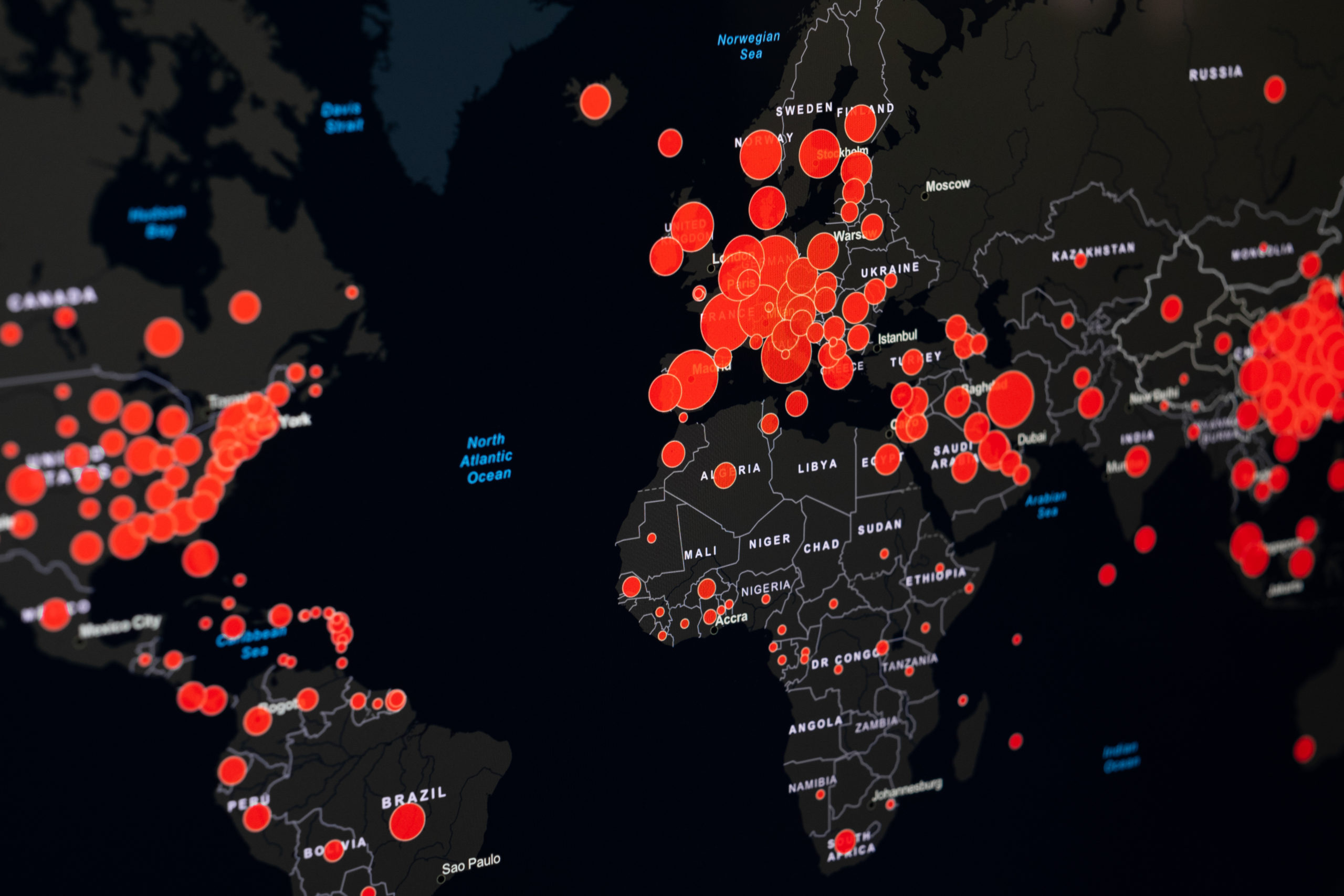
As the infodemic captures the world, old and new conspiracy theories find a way to take over the public debate. Thanks to our monitoring of independently fact-checked disinformation from France, Italy, and Spain, we have noticed that similar patterns are emerging regarding the types of conspiracy theories deliberately related to COVID-19.
As the virus swept across the world, we decided to zoom into the narratives defining what the WHO term as “the infodemic”. Based on our monitoring of independently fact-checked disinformation from France, Italy, and Spain, we have been able to draw trends from the content, such as the strategies and platforms used to disinform.
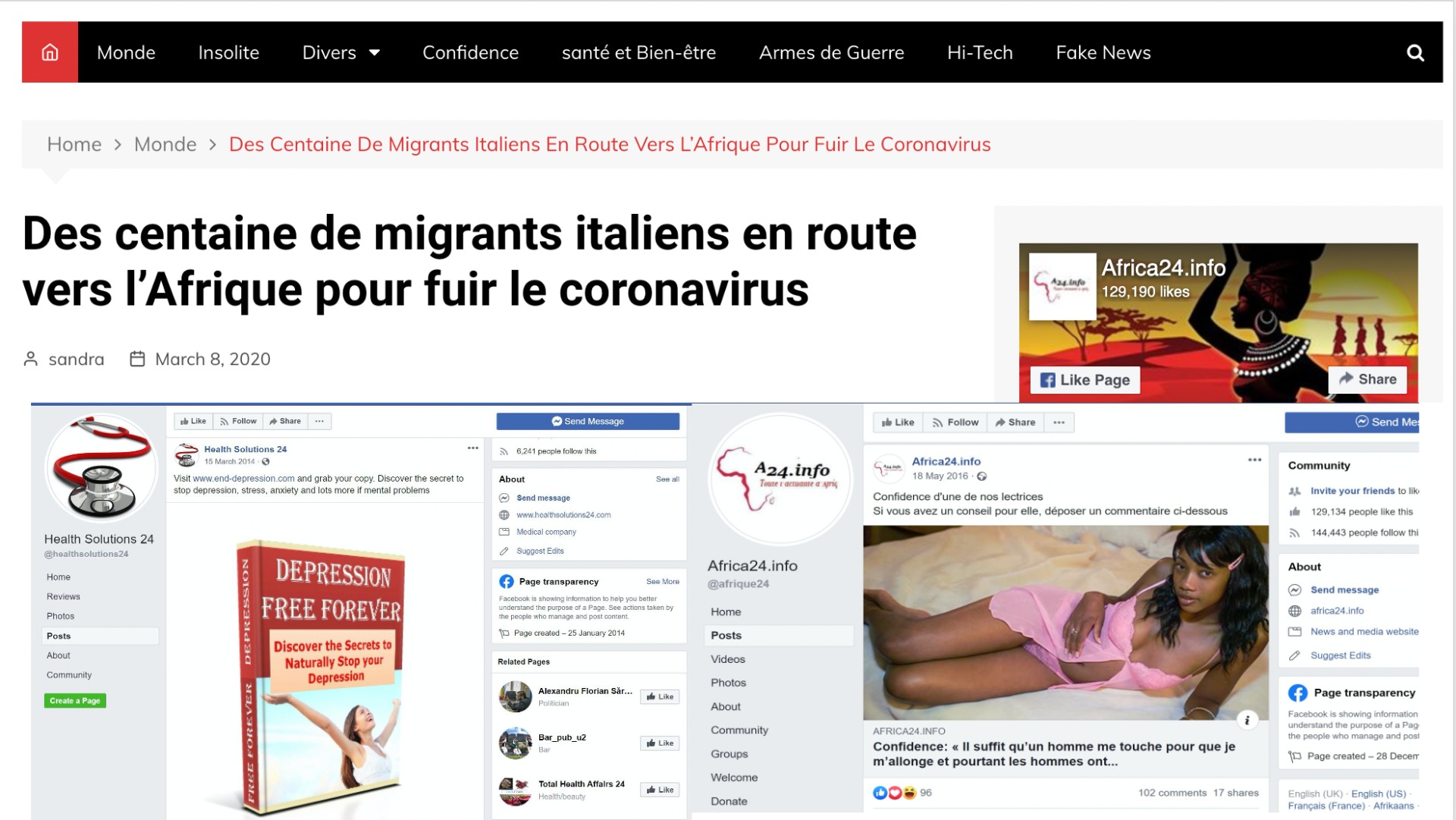
In autumn 2019, we began to look into two disinformation websites, Africa24.info and 24jours.com, which were regularly flagged by some fact-checkers as outlets that spread disinformation.
We uncovered a network around linfonational.net, which impersonated politicians on Facebook to amplify disinformation in France. Our investigation shows just how easy it is to use Facebook’s features to manage a disinformation network using political content.
How the so-called French media outlet France Libre 24 – which uses disinformation to sow polarisation in society – hides the fact that it’s managed by a Polish far-right network.
by Alexandre Alaphilippe, Gary Machado, Roman Adamczyk and Antoine Grégoire
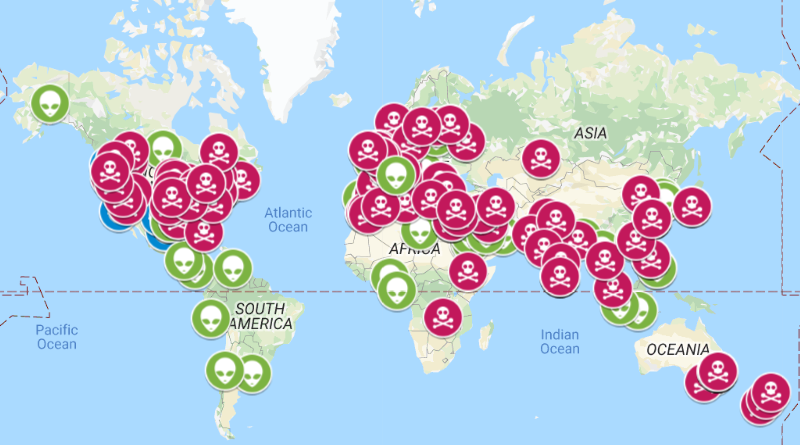
Over 265 fake local news sites in more than 65 countries are managed by an Indian influence network.
by Raquel Miguel
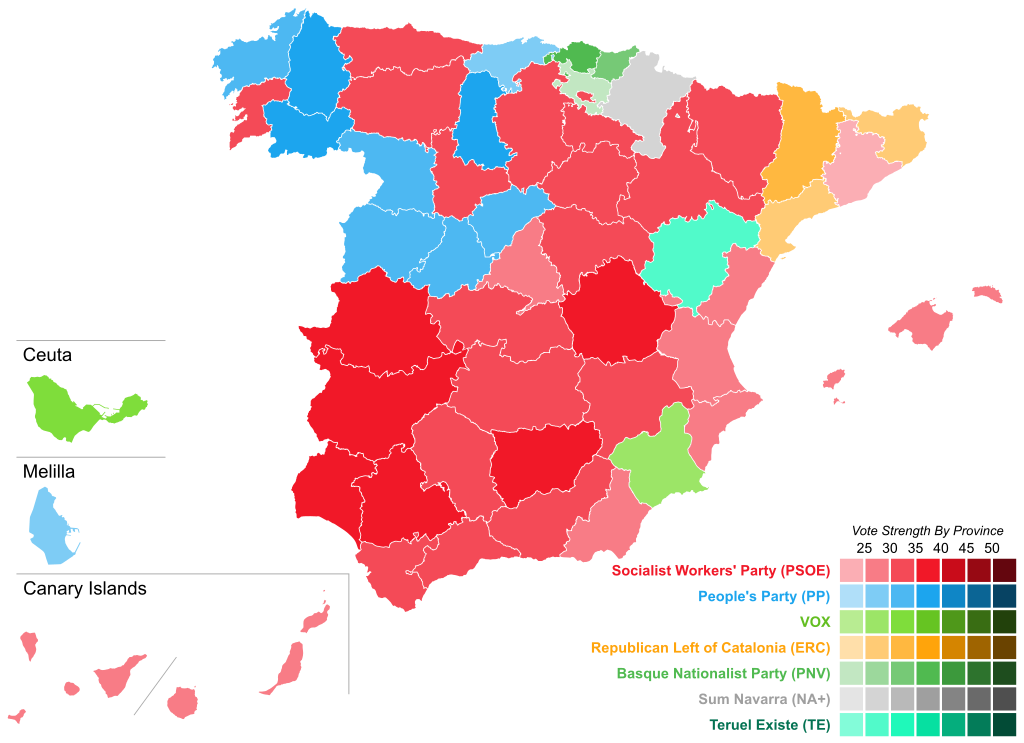
Voter suppression in the November 2019 Spanish general election
Recent investigations conducted by El País and eldiario.es (articles in Spanish) revealed voter suppression campaigns that had been active before the official start of the campaign on 1st November.
EUvsDisinfo uncovered that EP Today – the self-proclaimed “monthly news magazine for the European Parliament” – had misled readers into thinking that the website is affiliated with the European Parliament.
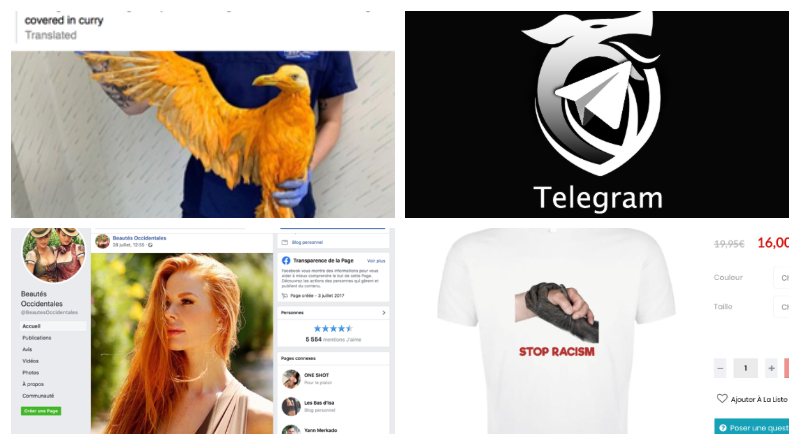
In cooperation with French media Le Monde, the EU DisinfoLab helped expose a French white supremacist network that uses deceptive Facebook pages to attract visitors on their website to generate revenue from online advertisements, and sell racist products as a means to support their activities.